

A Speculative Future: AI in Language Education

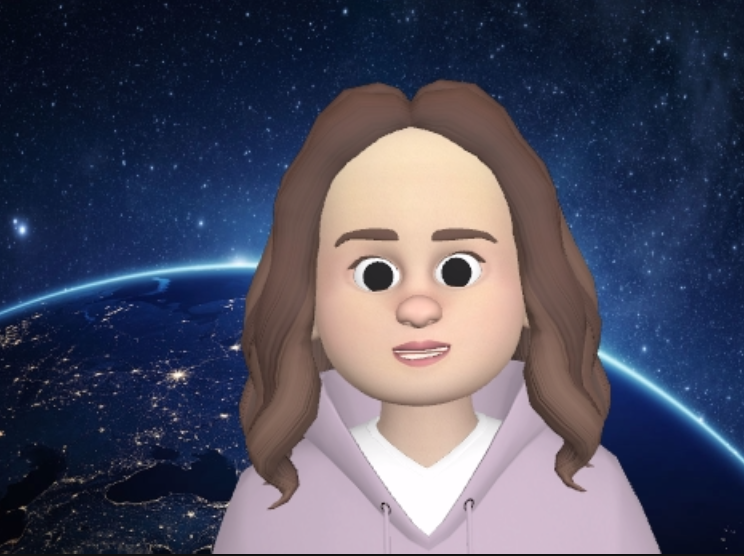
The year is 2030; Chloé, a Quebec university student with a background in tourism and history, struggles to learn English. Quebec has successfully reduced the amount of English spoken or taught in the province. Chloé, who is fluent in French, wants to have opportunities outside of Quebec but is struggling to find an English class, instructor, or even a tutor. She has decided to participate in an online class in Ontario. This class has weekly synchronous sessions over Zoom, where the teacher provides instruction in vocabulary, pronunciation, and sentence structure. Chloé worries about her progress; she does not know anyone in the class, and no one at home can help her practice as her family does not speak English. Setting up a meeting with her instructor, Chloé explains her concerns, and her instructor provides her with a Language Acquisition Mentor (LAM).
LAM is a tutor bot developed to help students learn a language, as it is equipped with various languages worldwide using Artificial Intelligence (AI). More specifically, it is an Intelligent Language Tutoring System (ILTS) designed to help with language learning (Tafalozi et al., 2019). In this case, Chloé will use LAM to help her practice English outside class. Chloé is excited to use LAM as she has heard that AI language bots are helpful for students. Back in 2023, applications such as Duolingo and Carnegie Speech were already in use, and the University of British Columbia was working on a project called Language Chatism (Pelletier et al., 2021; Stone et al., 2022). These applications were developed to help students with their language acquisition. Similar to those applications, the developers of LAM included Natural Language Processing (NLP) in order to help students like Chloé to have a conversation.
The instructor explained that because LAM has NLP, the AI tutor can understand Chloé when she speaks to it. Once the LAM has processed the information, it can appropriately respond to what was said (Son et al., 2023). Developers have created a more sophisticated form of NLP to be more effective when using an AI bot like LAM to help with language learning based on past research recommendations (Son et al., 2023). Chloé is intrigued; she had never thought she would be able to have an actual conversation with an AI tutor. Along with NLP, LAM has Automatic Speech Recognition (ASR). ASR helps LAM to understand both speech and written text. Chloé enjoys using this feature as she can have a more interactive learning experience. The great use of ASR is when Chloé dictates her notes to be transcribed, and she can review her mistakes and correct them (Son et al., 2023). LAM providing instant feedback is something that Chloé benefits from because she can work on her pronunciation and her written English, too, by being able to see her errors herself and learn to self-correct (Wang et al., 2022; Son et al., 2023). Finally, Chloé is excited about using something like LAM as she can choose her mentor’s appearance and virtual world, which makes her feel more motivated to learn as she feels a connection to her tutor (Shiban et al., 2015). While she enjoys her experience using LAM to help with learning English, some people are not convinced this type of tutor will work.
Hearing Chloé speaking to LAM, her parents sometimes tell her they still cannot believe that this is how she is learning a language and that they are sceptical that an application like LAM is helping her. Chloé explains to her parents that using an AI tutor helps to lessen her anxiety when speaking English as she does not feel judged (Yang & Kyun, 2022; Jeon et al., 2023). Since she cannot practice with her family or friends, and in Quebec, speaking English is not well received, this is the only way she can make progress. She continues to tell her parents that LAM, being an intelligent tutor and a goal-oriented chatbot, can personalize the learning to fit her learning style (Son et al., 2023; Huang et al., 2023). LAM can assess her mistakes, observe her English language ability, and tailor the activities to her needs. Finally, Chloé tells her parents that using a tutor such as LAM is very convenient for her; she can use it anywhere as it is downloaded onto her mobile devices (Yang & Kyun, 2022). While she understands her parent's worries, she tells them that while LAM is there to help her outside of class, it does not replace her human instructor; LAM supports her learning but is not her primary teacher.
LAM, her teacher explained, is not there to be Chloé’s instructor but to be a helper outside of class. With the instant feedback that Chloé gets, the instructor can also see her progress in learning English and where her language abilities lie (Son et al., 2023). While there used to be concerns that AI will replace language education teachers, research showed that it is the combination of both her human teacher and the AI tutor bot that helps students like Chloé in their pursuit of learning another language (Yang & Kyun, 2022).
In the end, Chloé finds that there has been much progress in learning English. Using a tutor like LAM, she has been able to work on her pronunciation, sentence structure, and written work (Tafalozi et al., 2019). One of Chloé’s aspirations was to one day move out of Quebec, but she was worried about her lack of English language skills. With her newly acquired understanding of English, she is ready to branch out to look for job opportunities in other provinces and countries. Sending her resume to many different places, an international touring company has contacted her to work for them. With her being fluent in French and knowing English, they believe that her bilingualism will be an asset. She is delighted that she found a course that provided a tutor such as LAM; without it, she may not have been able to practice or progress in learning English. Now in Europe, Chloé is excited for the next step in her life as a tour coordinator. Chloé smiles as she takes the bus to work, “I would not have had this opportunity without the help of LAM.”
References
Huang, X., Zou, D., Cheng, G., Chen, X., & Xie, H. (2023). Trends, research issues and
applications of artificial intelligence in language education. Educational Technology &
Society, 26(1), 112-131. https://doi.org/10.30191/ETS.202301_26(1).0009
Jeon, J., Lee, S., & Choe, H. (2023). Beyond chatgpt: A conceptual framework and systematic
review of speech-recognition chatbots for language learning. Computers &
Education, 206, 104898. https://doi.org/10.1016/j.compedu.2023.104898
Pelletier, K., Brown, M., Brooks, Christopher D., McCormack, M., Reeves, J., & Arbino, N.
(2021). 2021 Educause Horizon Report Teaching and Learning Edition. EDUCAUSE.
Shiban, Y., Schelhorn, I., Jobst, V., Hörnlein, A., Puppe, F., Pauli, P., & Mühlberger, A.
(2015). The appearance effect: Influences of virtual agent features on performance and
motivation. Computers in Human Behavior, 49, 5–11.
Son, J., Ružić, N. & Philpott, A. (2023). Artificial intelligence technologies and applications for
language learning and teaching. Journal of China Computer-Assisted Language
Learning. https://doi.org/10.1515/jccall-2023-0015
Stone, P., Brooks, R., Brynjolfsson, E., Calo, R., Etzioni, O., Hager, G., ... & Teller, A. (2022).
Artificial intelligence and life in 2030: the one hundred year study on artificial
intelligence. arXiv preprint arXiv:2211.06318. https://doi.org/10.48550/arXiv.2211.06318
Tafazoli, D., María, E. G., & Abril, C. A. H. (2019). Intelligent language tutoring system:
integrating intelligent computer-assisted language learning into language education.
International Journal of Information and Communication Technology Education (Ijicte),
15(3), 60–74. https://doi.org/10.4018/IJICTE.2019070105
Yang, H., & Kyun, S. (2022). The current research trend of artificial intelligence in language
learning: A systematic empirical literature review from an activity theory perspective.
Australasian Journal of Educational Technology, 180–210.
Wang, X., Pang, H., Wallace, M. P., Wang, Q., & Chen, W. (2022). Learners’ perceived AI
presences in AI-supported Language learning: A study of ai as a humanized agent from
community of inquiry. Computer Assisted Language Learning, 1–27.
Comments